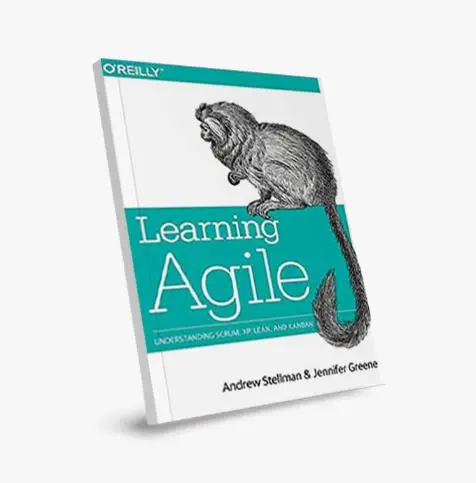
Learning Agile by Andrew Stellman and Jennifer Greene is one of the most comprehensive and accessible guides to Agile methodologies available today. The book covers Scrum, Extreme Programming (XP), Lean, and Kanban with a clarity that allows both beginners and experienced professionals to understand not just the practices, but the deep philosophy behind them. In a world where agility has become a requirement for business survival, this book provides the foundations needed to implement it with rigor and authenticity.
“Agile isn’t something you do. It’s something you become.” — Andrew Stellman & Jennifer Greene
BOOK SUMMARY
Learning Agile tackles the four most important Agile methodologies in a systematic and thorough manner. The book begins with Scrum, explaining roles such as the Product Owner and Scrum Master, ceremonies (sprints, dailies, retrospectives), and artifacts (product backlog, burndown charts). It then moves to Extreme Programming, detailing technical practices like pair programming, test-driven development, continuous integration, and refactoring. Each methodology is presented with concrete examples, real-world scenarios, and common mistakes teams make when trying to adopt them.
The second half of the book focuses on Lean Software Development and Kanban. The authors explain how the principles of the Toyota Production System apply to software development and project management: eliminate waste, amplify learning, decide as late as possible, and deliver as fast as possible. Kanban is presented as a visual management system that limits work in progress and optimizes flow. What sets this book apart from other Agile texts is that Stellman and Greene don’t just describe practices: they explain why they work, when to apply them, and crucially, what happens when they are implemented superficially without understanding the underlying values.
A recurring theme is the difference between “doing Agile” and “being Agile.” The authors show how many organizations adopt ceremonies and tools without changing their mindset, producing what they call “fragile Agile”: teams that follow Agile processes but achieve mediocre results because they haven’t internalized the principles of the Agile Manifesto. The book offers concrete tools for diagnosing and correcting these superficial implementations.
What makes this book special is that it treats agility as what it really is: a cultural transformation, not a checklist of practices. I have seen dozens of organizations that “implement Scrum” but continue to operate with a waterfall mindset. They hold 45-minute dailies, six-week sprints, and retrospectives where nobody tells the truth. At Scalabl®, we use Agile principles across all our acceleration programs because we understand that entrepreneurship is, by definition, an iterative process: you cannot plan an innovative business with a rigid five-year plan. Stellman and Greene perfectly capture this tension between structure and adaptability.
The great lesson of Learning Agile is that each methodology solves different problems. Scrum works when structure and visibility are needed. XP works when technical quality is critical. Lean works when inefficiencies must be eliminated. Kanban works when the workflow is continuous and variable. The most common mistake is choosing a methodology because it is fashionable, not because it solves the team’s specific problem. This book provides the tools to make that decision with sound judgment. I especially recommend it to leaders who want to go beyond the surface of agility and build teams that can truly adapt to uncertainty.
I also value that the authors don’t idealize any methodology. They show the limitations of each one, the contexts where they don’t work, and the most common anti-patterns. This honesty is rare in Agile literature, where many books promise magical results if certain steps are followed. The reality is that agility requires discipline, transparency, and a genuine willingness to change. This book makes that clear from the very first page.
Reading is the beginning. Applying is the leap.
At Scalabl you don't stop at the summary: you take the best business ideas to your own venture. Our flagship Entrepreneurship & Innovation Course: 10 years running, graduates in 50+ countries, 12 modules at your own pace.